
The Florida Department of Transportation (FDOT) began mobilizing for the replacement of the Sebastian Bridge on June 1, 2026.
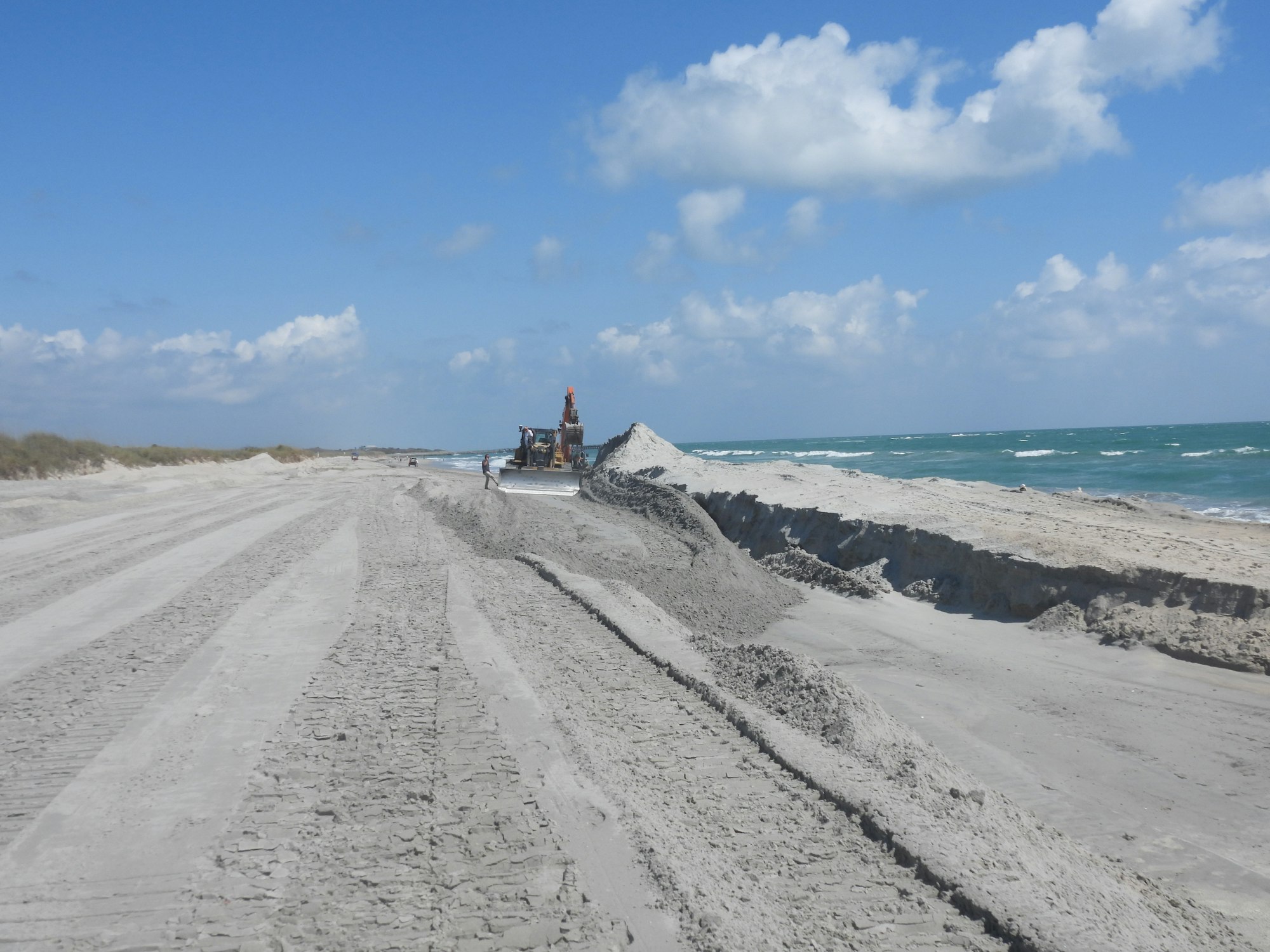
The District completed the Sand Trap Dredging and Beach Placement Project in April 2026, placing approximately 271,000 cubic yards on the south beach.
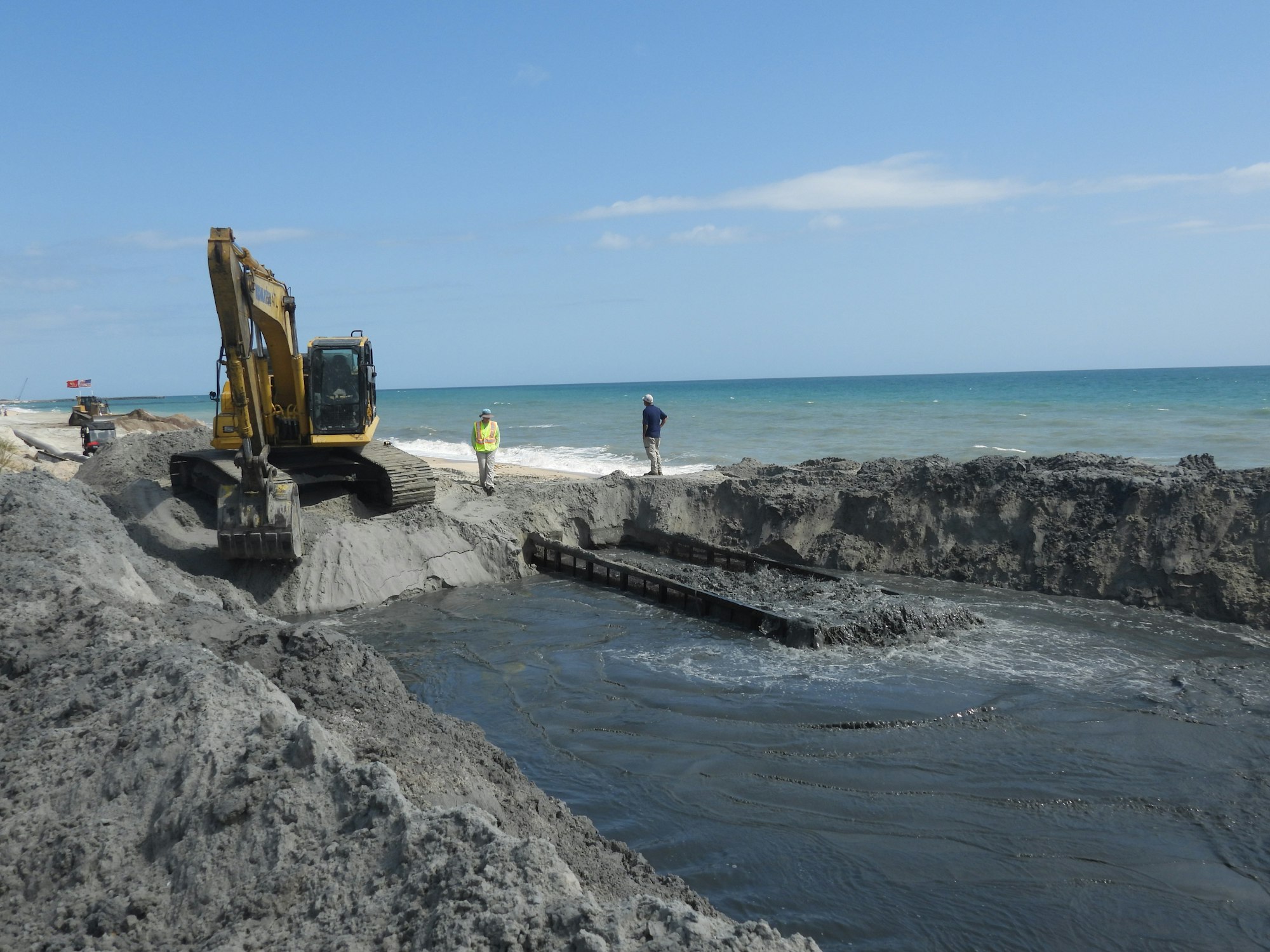
In April 2025, ATL completed about 43 percent of the estimated sand placement volume, or approximately 135,000 cubic yards of sand. The contractor returned in October 2025 to complete the dredging portion of the project.
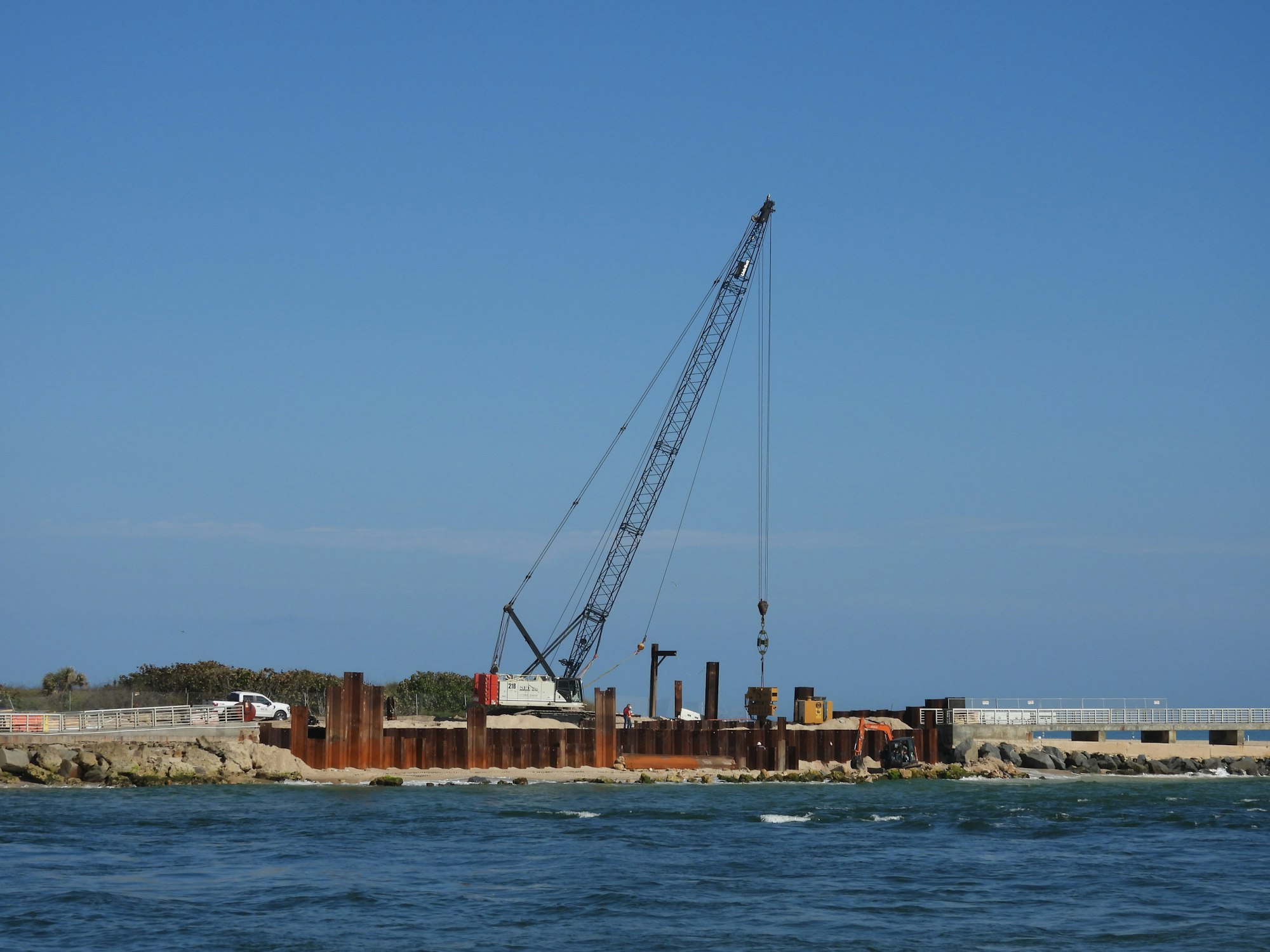
In 2025, the North Jetty Revetment Improvements Project revitalized 210 feet of the structure, adding new seawalls, granite boulders and a new walkway.
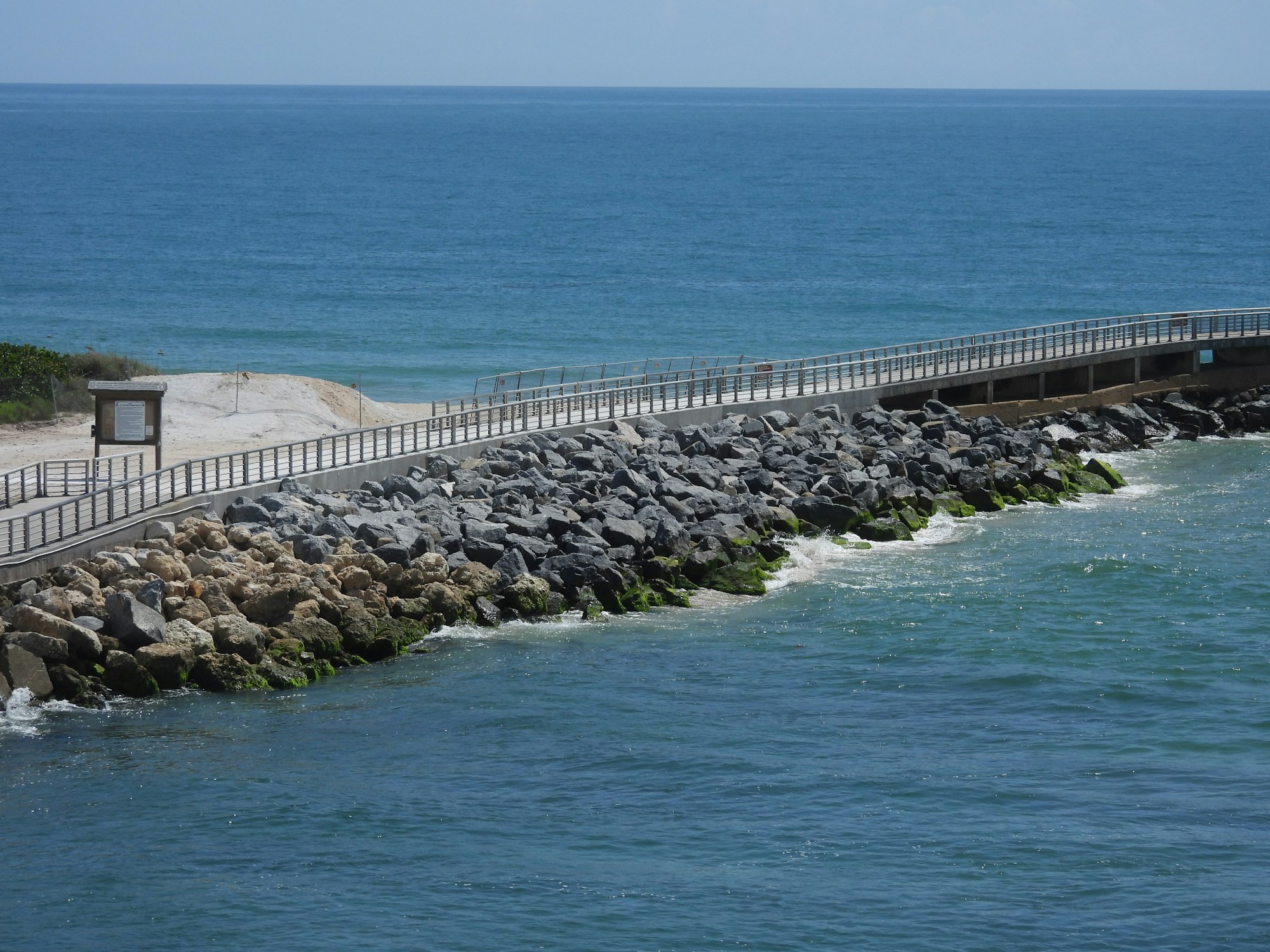
An image of the North Jetty Revetment Improvements project in June 2025 as it neared completion.
The District hosted a grand reopening of the north jetty on June 30, 2025 upon completion of the North Jetty Revetment Improvements Project.

In 2023, the District completed a beach sand placement project spanning 1.5 miles between the area of the McLarty Treasure Museum and an area 1,500 south of Ambersand Beach.

In 2023, the District completed a beach sand placement project spanning 1.5 miles between the area of the McLarty Treasure Museum and an area 1,500 south of Ambersand Beach.

Hurricane Nicole impacted the North jetty in November 2022. Within six weeks, the District began emergency repairs to the jetty's headwalls, walkway and splash apron.

Hurricane Nicole impacted the North jetty in November 2022. Within six weeks, the District began emergency repairs to the jetty's headwalls, walkway and splash apron.

In 2022, the District armored the shorelines on both sides of the inlet channel. Ad valorem taxes funded the $1.1 million project.

In 2022, the District armored the shorelines on both sides of the inlet channel. Ad valorem taxes funded the $1.1 million project.

More than 50,000 cubic yards of sand have been stockpiled in the District’s Dredged Material Management Area (DMMA) for future emergency beach fill and dune repair.

Phase I of the 2019 sand trap dredging project dredged the inlet's 42-acre sand trap, placing 113,000 cubic yards of sand on downdowndrift beaches

In 2019, the Sebastian Inlet District completed a sand trap dredging, channel maintenance and beach renourishment project. Phase II of the project dredged the 3,120-foot channel connecting the inlet to the Intracoastal Waterway.
Central to our mission in maintaining the navigational channel connecting the Indian River Lagoon and the Atlantic Ocean, the Sebastian Inlet District is responsible for bypassing sand that migrates into the inlet system to downdrift beaches per the Florida Beach & Shore Preservation Act, and conducts periodic dredging, channel maintenance and beach renourishment projects every 4-5 years. Employing a science-based approach, the District continously monitors the accumulation of sand in the 42-acre depression within the inlet (known as the sand trap) and the navigational channel through its research partnership with Florida Tech and semi-annual bathymetric surveys of the entire inlet system and backwaters.
The Sebastian Inlet District installed and maintains navigational channel markers leading to the inlet from the Intracoastal Waterway (ICW) in the interest of public safety, and also maintains the infrastructure of the inlet to include both the North and South jetties, as well as the shorelines on either side.
The 6-acre Dredged Material Management Area (DMMA) built and managed by the Sebastian Inlet District is located Northwest of the tide pool as serves as a sand storage site for emergency beach fill and dune repair. The District routinely works with marine scientists to conduct both permit-required and non-permit required biological monitoring of the critically important habitats surrounding the inlet that support a broad range of different species. These habitats include the seagrass beds on the Western flood shoal, the nearshore hardbottom reef just South of Sebastian Inlet and area beaches located within the Archie Carr National Wildlife Refuge.
The Sebastian Inlet District works closely with its partners at Sebastian Inlet State Park, the Florida Department of Environmental Protection (FDEP) and other local, state and federal agencies. Since 2008, the District has secured $12.5 million in cost-share grant funding from the FDEP Beaches and Funding Assistance Program in support of its projects. For more information on any District project, call (321) 724-5175.


